Was Napoleon Imprisoned at Königstein Fortress?
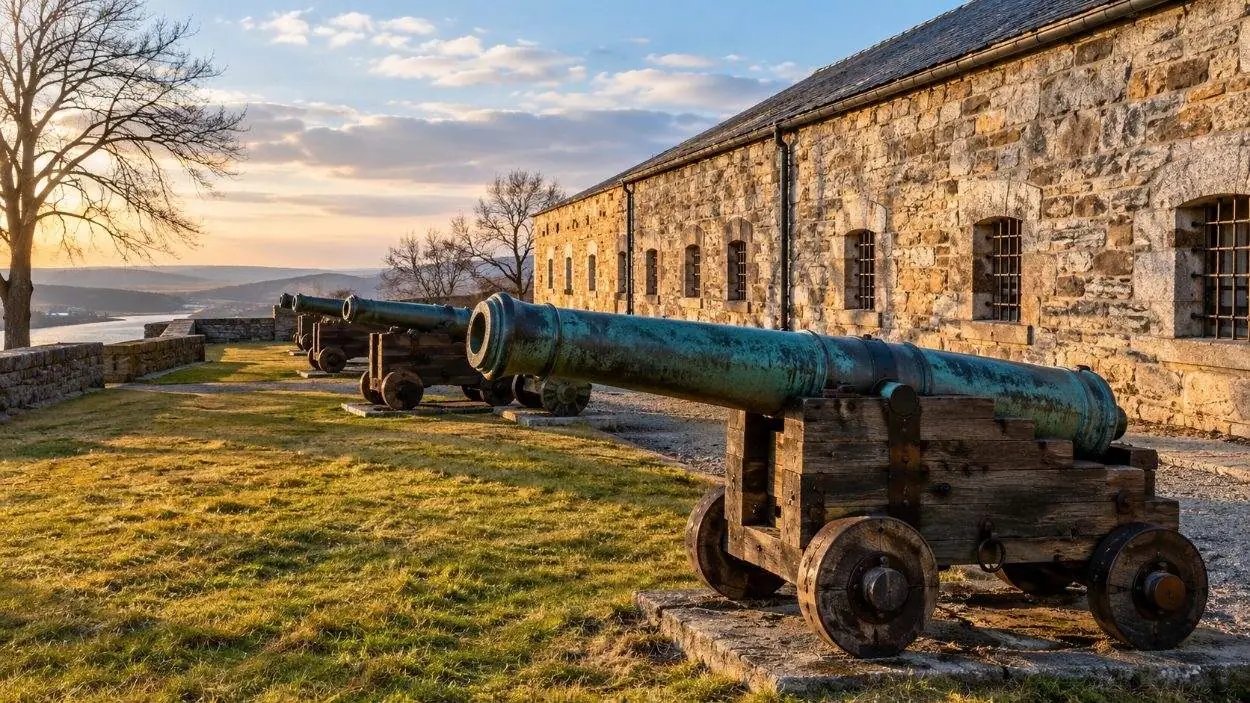
The hour he was here
June 1813 was the armistice between Lützen and Bautzen and the resumption of the autumn campaign, and the French wanted to know what the Saxons had given them. So Napoleon came up to look at the fortifications, made approving noises, and refused to be carried down a hill he was perfectly capable of walking down. It is a good anecdote and it is nearly the whole record.
What came after the visit is the substantial part. A military road was driven from Stolpen to the Elbe, two pontoon bridges were thrown across the river, and by August 1813 there were 485 French soldiers stationed on the rock. They were here because Saxony was allied to France and had agreed to it, not because anyone had taken the place — a distinction that matters, and that I argue out on was it ever conquered.
Why the myth sticks
Three reasons, in my experience. Königstein really was a state prison for roughly three hundred years, so a famous prisoner sounds plausible. Napoleon really did end his life as a prisoner, just two thousand kilometres away. And there is a beer garden up here called “Napoleons Küche” on the Blitzeichenplateau, which does nothing to help. The people who genuinely were locked up here are on the prisoner list, and the names on it are better than the one people arrive with.
If you want the actual Napoleonic layer of the site, look at the approach rather than the buildings. The ramp, the gate and the road below are what a French engineer would have been assessing in 1813, and they are the first thing you walk through.
Why was Napoleon never executed?
This question follows the first one around, so here is the answer, with the caveat that it has nothing whatever to do with Saxony. After his first abdication in 1814 the Allies exiled him to Elba under the Treaty of Fontainebleau. After Waterloo he surrendered to the British, and was deported to St Helena as a prisoner rather than put on trial. He died there in 1821. No tribunal, no sentence, no execution — and no connection to this rock at any point in it.
Seeing the works he approved of
The fortress-focused day out of Dresden and Pirna runs nine to twelve hours with groups limited to seven or eight, in English, Spanish, Czech or German. Hotel pickup, a guide, lunch at the castle and the fortress visit are all listed as line items, though the page never uses the word admission, so read that line as listed rather than settled. No rating and no reviews yet — it is a new listing, and I am not going to dress that up.
Frequently asked questions
Was Napoleon ever held prisoner at Königstein?
No. He visited once, on 20 June 1813, stayed roughly an hour, inspected the fortifications, approved of them and walked back down rather than take the sedan chair he was offered. He was never imprisoned here or anywhere in Saxony. The men who were held here are listed on who was imprisoned at Königstein.
Why was Napoleon not executed?
Because he was exiled instead, twice. The Treaty of Fontainebleau sent him to Elba in 1814, and after Waterloo he surrendered to the British and was deported to St Helena as a prisoner rather than tried. He died there in 1821. None of it happened in Germany.
Did French troops ever hold Königstein Fortress?
Yes, in 1813, but by agreement with Saxony rather than by conquest — 485 French soldiers were stationed here by that August, after a military road and two pontoon bridges had been built to serve the place. There was fighting before the gates and none inside them. More on the history page.