What to Wear at Königstein Fortress
Footwear
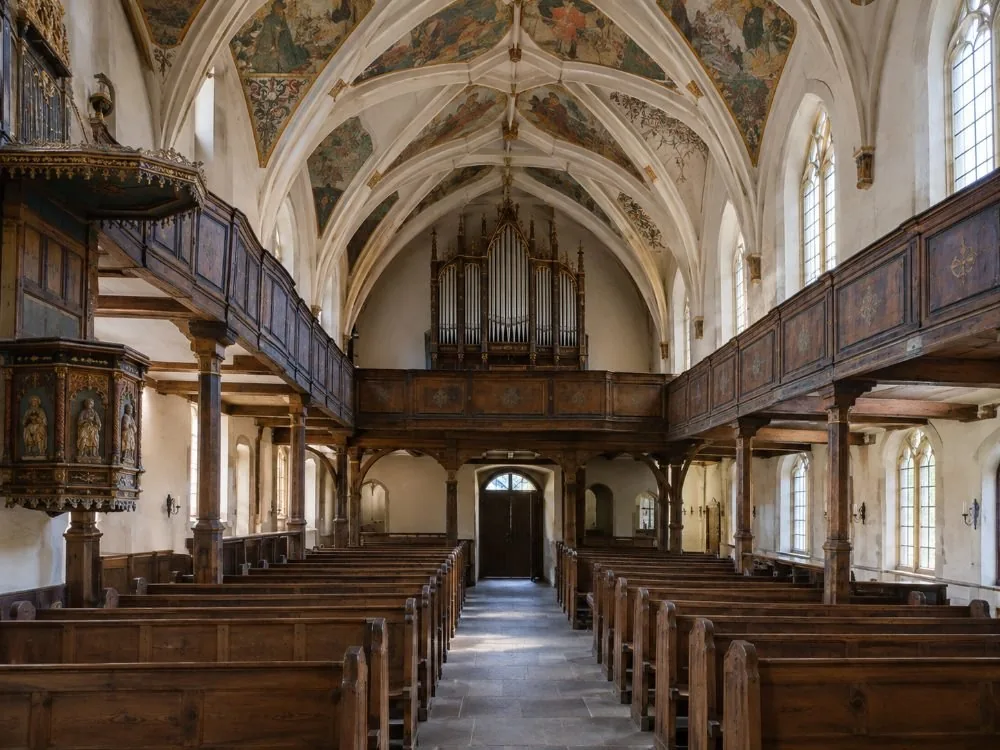
This is the only thing that really matters. The official wording is uneven paving and slopes, and that is accurate — surfaces laid for gun carriages and rebuilt over four centuries are not flat. Trainers are fine. Walking shoes are better. Smooth-soled town shoes are how people turn an ankle on a slope they were not looking at, and sandals plus the blue footpath from the Protestant church, which is built of steps, is a combination I would not repeat.
Layers, and the 240 metres
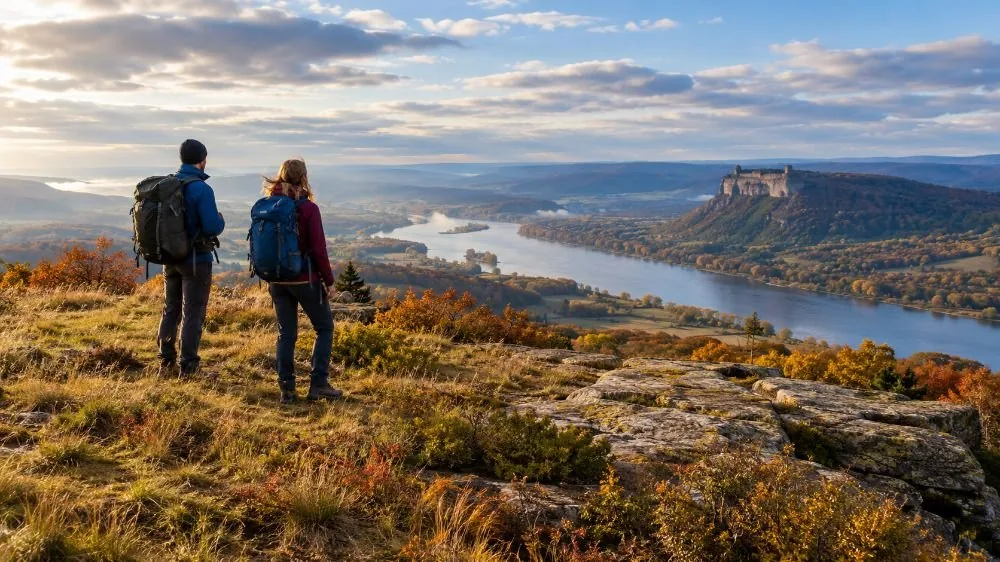
The plateau is exposed on every side. There is nothing between you and the weather on the wall circuit, and the wind comes up the valley. I have started shifts in the town in still air and spent the day at the top holding my hat on. Bring a windproof layer between October and April whatever the forecast says, and in summer bring one anyway for the last hour.
Then the reverse problem: the casemates in the Streichwehr and the underground passages stay cold all year. In August that is the best thing about them. In November it means you want the layer you were carrying.
Sun, not rain, is what catches people out in July. The plateau has very little shade — it was cleared deliberately, because a fortress with trees on it is a fortress with cover for somebody else. A hat does more good here than a jacket.
By season
What works
- Summer: sun hat, water, a light windproof layer for the walls, shoes you can walk in
- Spring and autumn: a proper waterproof, because the circuit has no shelter at all
- Winter: warm layers and grippy soles — wet sandstone and worn steps do not forgive
- Any season: a jumper for the casemates, which are cold whatever the date
Worth knowing
- No umbrella — it is exposed enough up there to be useless
- Nothing smooth-soled, in any weather
- Not much shade, so plan sun cover in July and August
- In winter there is no road-train, so factor a walk down into what you are wearing
If you are walking up
Thirty to forty-five minutes from the town, on the blue route with its many steps or the red route along the Alte Festungsstraße, which was built for carts and treats you accordingly. From the Parkhaus it is 650 metres. Either way you will arrive warm and then stop moving on an exposed plateau, which is precisely when the extra layer earns its place in the bag. Getting up the rock has the options.
On a boat
Different problem. An open deck on the Elbe in the evening is colder than the same air ashore, and the scenic evening sailing out of Bad Schandau runs May to the end of October, Fridays and Saturdays, in German only. Bring the jacket you would take up the rock. Paddle steamer cruises covers the sailings.
A day where the weather is somebody else’s problem
Seven hours from Dresden, 4.7 from 1,133 reviews, taking in the Bastei, the Schrammsteine, Rathen and the fortress, with entry here not included. One reviewer called the fortress incredible “despite some really heavy rain”, which is either reassuring or a warning depending on your coat.
Where you will be standing
 Most booked
From Dresden: Saxon Switzerland National Park Full-Day Trip
 Built around the fortress
From Dresden: Lilienstein & Königstein Tour
 Friday & Saturday evenings
Bad Schandau: Romantic End of the Day Tour (L33)
The nine-to-twelve-hour tour includes a climb up the Lilienstein across the river, which is a different footwear question again. Is it worth visiting covers what weather does to a day here.
Frequently asked questions
What shoes should I wear at Königstein Fortress?
Anything with grip that you can walk about 1.8 kilometres in. The fortress describes uneven paving and slopes, and it is accurate — these are historic surfaces that cannot be relaid. Trainers or walking shoes, not smooth soles. If you are climbing up from town, see getting up the rock first.
Is it colder at the fortress than in the valley?
Usually, yes, and windier. You are 240 metres above the Elbe on an exposed plateau with no shelter on the wall circuit. Take a windproof layer even in summer. The casemates and underground passages stay cold all year, which is a mercy in August. The best time to visit goes month by month.
What should I bring for a rainy day at the fortress?
A real waterproof rather than an umbrella, because the circuit is exposed. Be honest with yourself, though: this is an open-air museum and rain removes most of the point, so if your dates are flexible, move the visit. Is it worth visiting sets out when it is not.
Is there anywhere to leave a bag or a coat?
The fortress does not publish a left-luggage arrangement I can confirm, so plan to carry what you bring — which is another argument for packing light and layered rather than bulky. Ask at the ticket window in the Torhaus on arrival; the tickets page explains where that is.