Königstein Fortress, Explained
I grew up in the town directly beneath this rock and worked seven seasons on top of it, four of them on the ticket windows in the Torhaus. The question I got most was not the one about Napoleon, though that came second. It was: which part can I see without paying. The answer is none of it, and the reason is the whole point of the place.
A table mountain that was most of the way to being a fortress
Start with the geology, because everything follows from it. The river and the weather cut this plateau into separate blocks and left flat-topped tables with sheer sides. Königstein is one of them: 9.5 hectares of level ground standing 240 metres above the Elbe, with cliff faces and walls reaching 42 metres round the rim. That 42 is a height, not a wall thickness. Run 1,800 metres of wall along the edge and you have something that barely needed fortifying.
People worked that out early. The first written mention is 1233, in a charter of King Wenceslas I of Bohemia naming a Burggraf Gebhard vom Stein. In 1241 the Oberlausitzer Grenzurkunde records the place as in lapide regis, on the stone of the king — the source of the name, and the title of the permanent exhibition today. The early 13th-century chapel is still up there as the garrison church, still the oldest structure on the rock. Elector Christian I turned the castle into a state fortress in 1589–1591, and from the late 16th century it served as a state prison for roughly three hundred years. The full chronology.
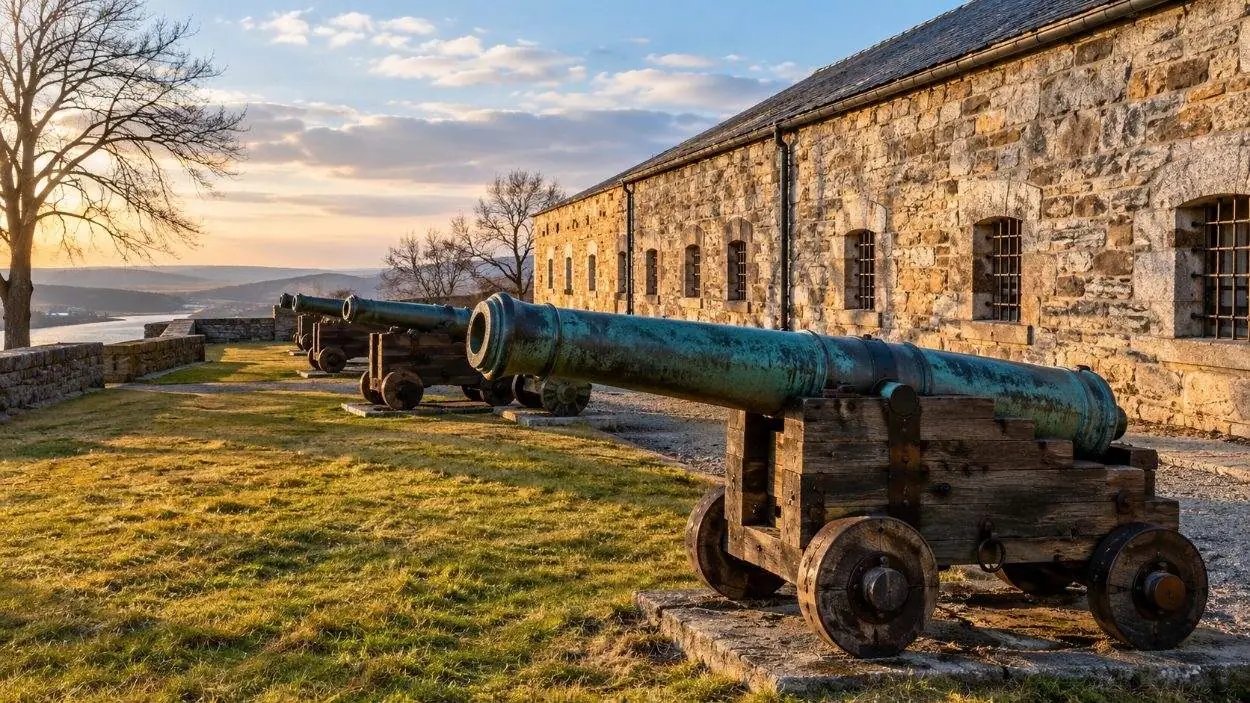
The crates in the cellars
If you remember one thing from this page, make it this one. From January 1943 the entire Green Vault treasure was brought up here in crates for safekeeping, along with 450 crates from the Historical Museum and pieces from the porcelain and painting collections, Liotard’s The Chocolate Girl among them. At the same time the fortress was Oflag IV-B, a camp for high-ranking Polish, French, British, Dutch, Norwegian and American officers. On 8 May 1945 it was surrendered to French General Condé; Soviet troops arrived the next day, removed the valuables and the German guards, and left. The GDR made the place a museum in 1955; in 1991 it passed to the Free State of Saxony.
The ticket situation, in two sentences
GetYourGuide sells no admission ticket to this fortress: between its own attraction page and the Königstein destination page there are four products, every one of them a multi-hour tour or a cruise. And you do not need one in advance anyway, because the fortress sells its own at the windows from 09:00 to 17:00, every day except 24 December, and recommends booking ahead to skip a queue rather than to secure a place. The working, shown.
The problem is not the ticket. It is 240 metres.
This is the part nobody plans for. The car park at the B172 turn-off is 650 metres on foot from the fortress; the station on the S1 line is about a twenty-five minute walk away and is not step-free. From the town, two marked trails take 30 to 45 minutes — the blue route from the Protestant church, mostly steps, and the red route along the Alte Festungsstraße. The Festungsexpress road-train runs April to October, on the hour and half-hour from 09:00 to 16:30, and the last return from the fortress leaves at 17:00.
The two lifts get confused constantly. The passenger and goods lift of 1967–1970 is licensed for 42 people, has two intermediate stops, takes vehicles up to 4.5 tonnes and runs year-round; my grandfather was one of the fitters on it, which is why I am tedious on the subject. The Panoramaaufzug is the glass one: built 2005, in service from Easter 2006, climbing about 42 metres of outer rock face, maximum 18 passengers, April to October only. Whether lift use is included in admission is not published, so I will not pretend to know. Every route up, compared.
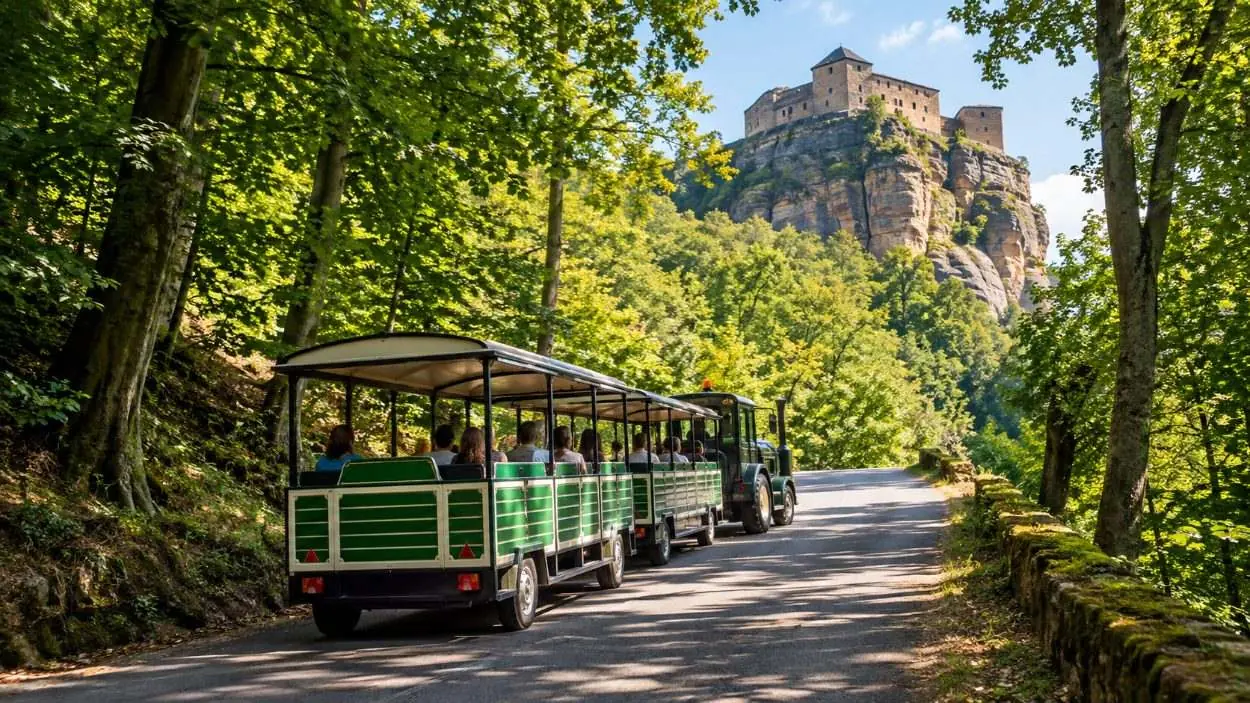
Three things I corrected every working day
Napoleon was never imprisoned here. He visited on 20 June 1813, stayed about an hour, inspected the works, expressed approval and declined the sedan chair offered for the way down. He walked. Afterwards a military road went in from Stolpen to the Elbe and by August there were 485 French soldiers up here. The visit in detail.
“Never conquered” needs a footnote. Never stormed and never besieged into surrender, yes. Never changed hands, no — it was handed over on 8 May 1945. In 1756 nobody attacked it; Elector Friedrich August II watched from up here while the Saxon army capitulated to the Prussians near the Lilienstein. In 1813 the French held it by agreement with Saxony, not by conquest. The claim, tested.
There is no free part. Asked straight out whether you must pay if you only walk around outside and skip the exhibitions, the fortress says yes, because the whole complex is a 9.5-hectare open-air museum with more than 50 historic military buildings on it. The wall circuit is not a park with a museum in the middle. It is the museum. Asked and answered.
What I would do with a day
Two to three hours covers the circuit of about 1.8 kilometres and the exhibitions most people come for. Take all 33 rooms and a guided tour and you are into half a day, which a seven-hour trip out of Dresden will not give you — reviewers on that one report roughly two hours on the rock. If the fortress is why you are coming to Saxony, come under your own steam or take one of the two tours that genuinely goes in. And check the official calendar first: single closure days appear year to year.
Ready to go?
If you want a day that actually ends up inside the walls rather than looking at them from a boat, start with what each tour really does, then read how the ticket works and how you get up there.
Frequently asked questions
Do I need to book a Königstein Fortress ticket in advance?
No. The fortress sells tickets at its own windows from 09:00 to 17:00 and nothing in its published guidance suggests they sell out. Booking ahead saves you a queue, not a place. The full picture is on tickets and entry.
How long should I allow for a visit?
Two to three hours covers the wall circuit and the headline exhibitions. The full 33-room permanent exhibition plus a guided tour makes it half a day. See how long you need.
Was Königstein ever captured?
Never stormed and never besieged into surrender — but it did change hands, being surrendered on 8 May 1945. The detail, and the 1756 and 1813 caveats, are on was it ever conquered.